NestBuddy journal
The complete bond-cleaning checklist for Brisbane renters
A practical room-by-room checklist for cleaning, gardens, carpets, keys, photos and the final rental handover in Queensland.

A bond clean can feel like one enormous cleaning job. It is easier to think of it as a property handover.
Bond cleaning is also called exit cleaning or end-of-lease cleaning. Before you book a cleaner or start the work yourself, check your Entry condition report and confirm what needs cleaning, what the quote covers and what must be ready for handover.
This guide is for Brisbane renters, including people moving around Wynnum, Manly, Lota and the wider Bayside area. The tenancy guidance is specific to Queensland; check the relevant state or territory rules if your rental is elsewhere in Australia.
The kitchen and bathroom matter, but so do the smaller jobs that create last-minute stress: window tracks, fan blades, cupboard tops, garage floors, garden clippings, bins, light bulbs, keys, remotes and equipment that belongs to the property.
This checklist brings those jobs together room by room. The aim is to leave the rental clean, complete and ready to hand back, rather than trying to make an older property look brand new.
End-of-lease cleaning requirements in Queensland
Before reaching for the cleaning products, find your Entry condition report and any photos or videos you took when you moved in. They are your starting point.
A faded curtain that was already faded is different from a new stain. An old chip in a benchtop is different from new damage. The RTA recommends using Entry and Exit condition reports, supported by photos, to document the property’s condition.
| Task | What to confirm |
|---|---|
| Entry records | Find the Entry condition report and your original photos or video. |
| Belongings | Remove belongings from the areas being cleaned. |
| Cleaner’s scope | Check exactly what the quote includes and excludes. |
| Carpets and pests | Review the starting condition and any relevant tenancy or pet-approval terms. |
| Rubbish | Plan how unwanted items and excess waste will leave the property. |
| Handover | Confirm the key-return and vacate-inspection process. |
Bond-cleaning checklist at a glance
Use this overview to plan the work, then check the detailed sections for the easy-to-miss items.
| Area | Clean or check | Commonly missed |
|---|---|---|
| All rooms | Walls, floors, windows, doors, skirting, fans and fittings. | Window tracks, switches, door tops and insects in light covers. |
| Kitchen | Cupboards, benches, sink, stove, oven and rangehood. | Cupboard tops, racks, trays and greasy filters. |
| Bathroom | Shower, bath, basin, mirrors, tiles and storage. | Drains, grout, screen residue and drawer interiors. |
| Toilet | Bowl, seat, cistern, floor and surrounding surfaces. | Behind and around the pedestal. |
| Laundry | Tub, cabinets, floors and walls. | Behind appliances and detergent residue. |
| Garage | Floor, walls, doors, windows and stored items. | Cobwebs, grease, rubbish and forgotten belongings. |
| Outside | Patio, balcony, paths and accessible external areas. | Cobwebs, debris and forgotten rubbish. |
| Garden | Lawn, edges, weeds and garden beds where these are your responsibility. | Grass clippings and green waste. |
| Carpets | Return them to the appropriate starting standard, allowing for fair wear and tear. | Stains, hidden areas and drying time. |
| Final handover | Keys, remotes, bins, photos and paperwork. | Property equipment, spare keys and documentation. |
1. All rooms: look up, down and around the edges
Most rooms do not contain one difficult cleaning job. What makes them time-consuming is the number of places that are easy to overlook.
Check:
- window glass, screens, frames, sills and tracks;
- removable marks and grime on walls;
- switches and power points;
- accessible ceilings, light fittings and fan blades;
- accessible air-conditioning filters and vents;
- skirting boards;
- the front, back, edges and handles of doors;
- blinds, curtains and their fittings; and
- floors using a method appropriate to the surface.
Check whether blinds and curtains are included
Check blinds, curtains and fittings against their starting condition. If you are hiring a cleaner, ask whether dusting, spot cleaning or another suitable treatment is included, and which materials need specialist care. Do not assume every blind or curtain can be washed in the same way.
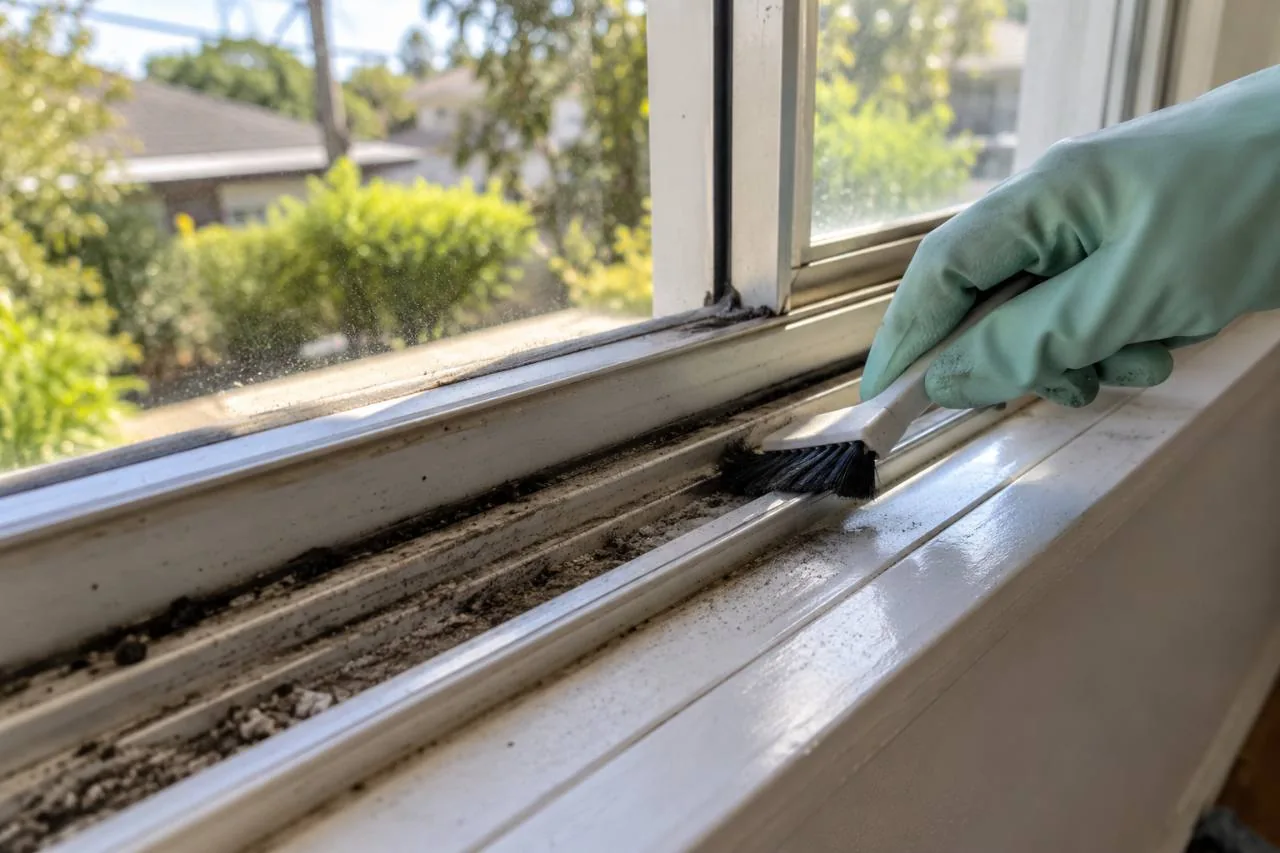
The easy one to miss: window tracks
Window tracks almost disappear while the home is furnished. Once the furniture is gone and the curtains move, they become obvious.
Open each window and inspect the bottom track, corners, sill, frame, flyscreen and any buildup behind the sliding section.
2. Kitchen: clean from the top down
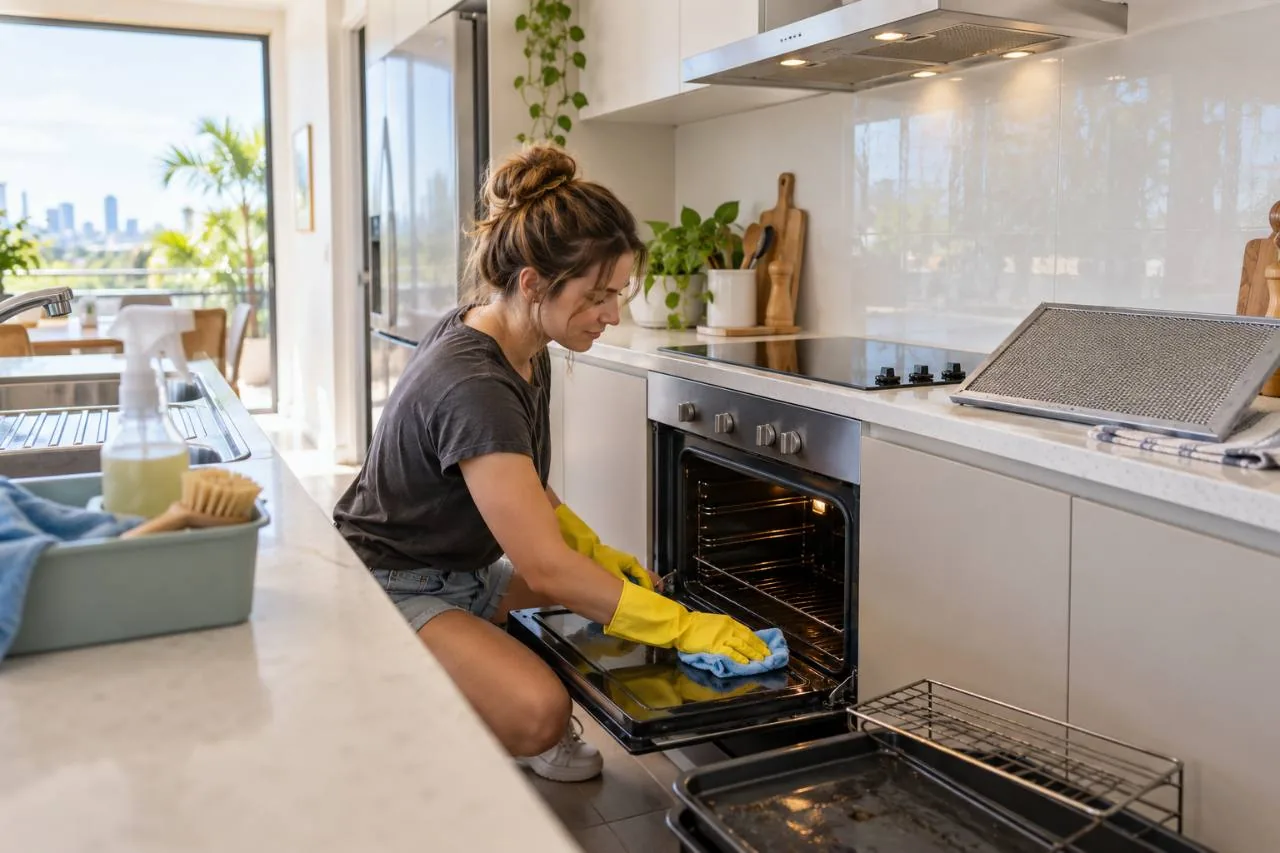
The kitchen is easy to underestimate because grease travels. A benchtop and stovetop can look clean while the cupboard tops or rangehood filter remain greasy above eye level.
| Zone | Clean or check | Often missed |
|---|---|---|
| Cupboards | Interiors, doors, handles and trims. | Tops of overhead cupboards. |
| Drawers | Empty and wipe internally. | Corners and runners. |
| Benchtops | Full surface and edges. | Areas behind appliances. |
| Splashback | Degrease and wipe using a suitable product. | Corners near the stove. |
| Sink | Basin, taps and surrounding area. | Around the tap base. |
| Stovetop | Surface and removable components. | Baked-on residue and edges. |
| Oven and grill | Interior, door, glass, racks, trays and removable parts. | Rack edges and corners. |
| Rangehood | Exterior and appropriate filters or vents. | Grease above eye level. |
| Dishwasher | Interior condition and obvious debris. | Filters and forgotten items. |
If you are hiring a cleaner, ask whether the quoted price includes the oven, racks, trays and rangehood. That is more useful than simply asking whether the business performs bond cleans.
If you are comparing local options, NestBuddy has bond-cleaning pages for Brisbane Bayside, Wynnum, Manly and Wakerley.
3. Bathroom: residue hides in the details
Bathrooms may have less surface area than kitchens, but more places for residue to hide. Look closely at the edges.
Check the shower screen, shower recess, bath, tiles, grout, basin, taps, mirrors, vanity, drawer interiors, visible drains, accessible exhaust surfaces and residue around fittings.
Cleaning is different from restoring
Normal ageing is not the same thing as dirt or tenant-caused damage. The RTA defines fair wear and tear as deterioration through normal use, ageing or environmental exposure. Dirt, grime, grease and negligent damage are treated differently.
A cleaner can remove soap residue. They cannot reverse structural cracks, old grout, faded finishes, aged surfaces or maintenance problems.
4. Toilet: check the parts you do not normally look at
Most people remember the toilet bowl. The surrounding area is easier to miss.
Check the top and underside of the seat, both sides of the lid, the cistern exterior, the full pedestal or pan, the floor around the base, the nearby wall and the space behind the toilet.
Getting down to eye level can reveal residue that is difficult to see while standing.
5. Laundry: move the appliances before declaring it done
A nearly empty laundry can look clean while hiding lint, dust and detergent residue behind appliances.
Check the laundry tub, tapware, cabinet interiors, floors, walls, skirting, corners, plumbing connections and the area behind the washing machine. If the appliance has already moved, clean the space it was hiding.
6. Garage and shed: empty does not automatically mean clean
Once the boxes and tools leave, dirt underneath becomes much more obvious.
Sweep the floor, clear cobwebs and debris, inspect obvious wall buildup, clean appropriate door and window surfaces, empty shelves, remove rubbish and confirm nothing has been left in the shed or storage areas.
If a floor has oil or grease staining, ask the property manager or an appropriate professional before using an aggressive chemical that could damage the surface.
7. Patios, balconies and outdoor areas
The property does not stop at the back door. Check accessible patios, balconies, stairs, paths, storage areas and the space beneath outdoor furniture before it leaves.
Sweep surfaces, remove accessible cobwebs, clear debris and rubbish, and make sure no belongings have been abandoned.
8. Lawns and gardens: finish the job, not just the mowing
If garden maintenance is part of your tenancy responsibilities, plan the final work close enough to handover that the area remains tidy.
Check the lawn, edges, garden beds, accessible paths, shrubs within your responsibility, grass clippings, green waste and rubbish. The detail people often forget is the cleanup after mowing or gardening.
Where possible, move heavy items first, complete the final garden work, clean outdoor paths and then photograph the finished condition.
9. Carpets: check the starting condition before booking anything
The RTA says carpets should be returned to the same standard they were in at the beginning of the tenancy. That does not mean every tenant is automatically required to purchase professional carpet cleaning.
The property manager or owner generally cannot require a tenant to leave the property in better condition than it was at the start, purchase a carpet-cleaning service, use a specific provider or pay a set carpet-cleaning fee. The circumstances and any lawful tenancy conditions still matter. Read the RTA carpet-cleaning and pest-control guidance.
Before deciding what to do, check:
- the Entry condition report;
- the carpet’s starting standard;
- relevant tenancy terms;
- any pet-approval conditions; and
- the carpet’s current condition.
If you hire a carpet cleaner, ask what must be moved, how access works, whether stains need to be identified and how much drying time is required.
10. Pest and flea treatment: it is not automatic for everyone
Pest treatment follows a similar principle. A property manager or owner generally cannot simply require every tenant to purchase a pest-control service, use a particular provider or pay a set fee.
Reasonable conditions associated with an approved pet can include professional fumigation or carpet cleaning in some circumstances. Check your own tenancy agreement, pet approval, Entry condition report and circumstances. Read the RTA renting-with-pets guidance.
If treatment applies, confirm when it should happen, whether the property must be empty, the preparation and re-entry requirements, and what documentation the provider supplies.
11. Separate cleaning from repairs, gardening and handover
Booking a bond cleaner does not automatically complete the whole vacate.
| Issue | Usually belongs to |
|---|---|
| Greasy oven or dirty window track | Cleaning. |
| Overgrown lawn | Gardening, where it is the tenant’s responsibility. |
| Hole in a wall | Property condition or repair. |
| Broken appliance component | Maintenance or damage, depending on the cause and circumstances. |
| Furniture left behind | Removal or disposal. |
| Missing key, remote or property equipment | Handover. |
| Exit condition report | Tenancy documentation. |
| Electricity and internet changes | Moving administration. |
| Bond refund | Tenancy administration. |
12. Check the bins
Bins are easy to forget, especially when collection falls just after moving day.
Remove loose rubbish, check the bins themselves, deal with excess waste and confirm what must happen if bin day falls after you vacate. This becomes much harder once the keys have been returned.
13. Check light bulbs, remotes, keys and property equipment
The last stage is handover rather than cleaning. Walk through and identify anything belonging to the property.
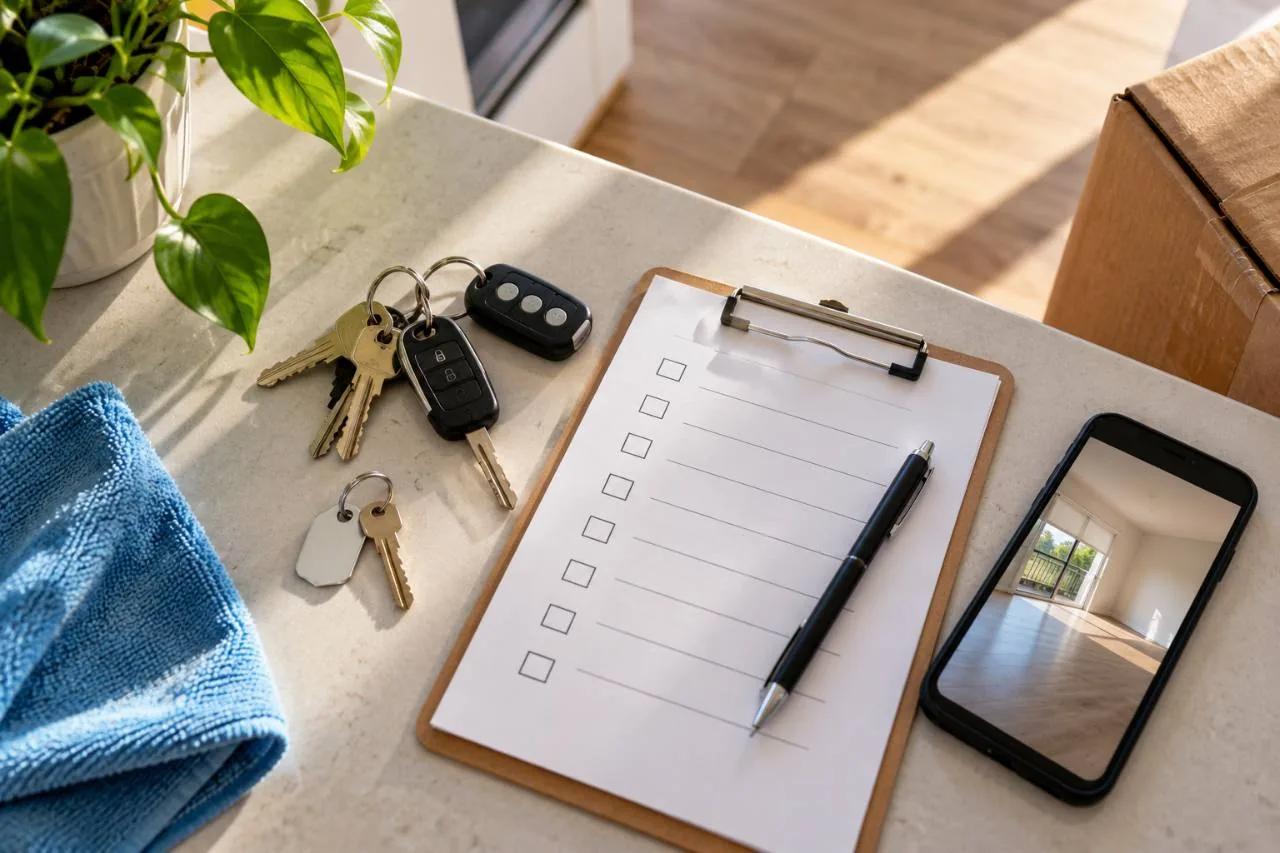
Account for door, garage and mailbox keys; remotes; access cards; spare keys; ceiling-fan and air-conditioner remotes; property manuals; supplied equipment; and light bulbs where appropriate. Check whether any internet equipment belongs with the property before removing or leaving it.
14. Do a final empty-house inspection
When the property is completely empty, walk through it one last time. Do this after the boxes have gone and you can inspect without interruption.
| Final check | Confirm |
|---|---|
| Cupboards and drawers | Every one is empty and checked. |
| Garage, shed and storage | Belongings and rubbish are removed. |
| Windows and kitchen | Tracks, oven and rangehood have had a final check. |
| Bathrooms and floors | Inspect after the property is empty. |
| Garden and outdoor areas | Check lawn, debris, clippings and waste where relevant. |
| Keys and remotes | Count every item being returned. |
| Property equipment | Confirm supplied items remain where required. |
| Evidence | Take final photos and complete the Exit condition report. |
15. Complete the Exit condition report and take photos
For general tenancies in Queensland, the Exit condition report (Form 14a) records the rental’s condition at the end of the tenancy. It is compared with the Entry condition report, and the RTA recommends taking photos as further evidence.
Where the tenant and property manager complete the report separately, the RTA describes a process in which the tenant removes belongings, cleans, completes the report and returns it when handing back the keys. The property manager reviews it during the vacate inspection, adds comments and returns a completed copy. Read the current Exit condition report process.
Photograph each room and the main surfaces, including floors, walls, windows, kitchen, oven, bathrooms, garage, garden and bins. Record any area where the condition may later be questioned. Useful evidence matters more than hundreds of decorative photos.
16. If the property manager finds something
If a cleaner offers a return visit for missed work, check our guide to 72-hour re-clean policies and bond-back guarantee wording. It explains what to confirm about the reporting window, evidence, exclusions and access.
An issue at the vacate inspection does not automatically mean disaster. The RTA encourages tenants and property managers to communicate and work towards a solution where cleaning or damage needs to be addressed.
Depending on the circumstances, you may be able to return and rectify something, arrange a provider, explain the condition, supply entry evidence or clarify whether the issue involves cleaning, damage or fair wear and tear. Keep your photos, receipts and reports until the process is complete.
Who should do what?
If the move feels chaotic, break the vacate into separate jobs rather than treating it as one giant DIY task.
| Job | DIY may suit | Consider a provider when |
|---|---|---|
| General cleaning | You have enough time and suitable products. | You are short on time or need help completing the property. |
| Oven and rangehood | The buildup is manageable. | Heavy residue makes the work time-consuming. |
| Windows and tracks | Areas are accessible and the property is small. | The property is large or access is difficult. |
| Carpets | The required starting standard can be restored safely. | Specialist equipment or an agreed professional standard applies. |
| Pest treatment | Only where appropriate for the circumstances and permitted treatment. | Your tenancy or pet-approval circumstances call for professional work. |
| Garden | You have the time and equipment. | The yard, timing or equipment makes help practical. |
| Rubbish removal | Waste fits an appropriate disposal option. | You have bulky or excess waste. |
| Exit condition report | This remains the tenant’s responsibility. | A cleaner does not replace this report. |
For the order of jobs in the final week, use our seven-day moving logistics checklist alongside this room-by-room guide.
A final rule: aim for ready to hand back
Instead of asking whether you have cleaned enough, ask:
If I handed the keys back right now, is there anything obvious I would have to come back for?
Walk the empty property. Open the cupboards. Look behind the toilet. Check the window tracks and fan blades. Open the garage. Check the bins and garden. Count the keys. Take your photos. Then hand it back.
Sources and methodology
This guide uses current Queensland Residential Tenancies Authority guidance on cleaning, fair wear and tear, carpet cleaning and pest control and the Exit condition report.
It also reflects the kinds of practical tasks found in pre-vacate material used by property managers. An individual agency checklist can show what may be inspected, but it is not the same thing as Queensland law. Check your tenancy, pet approval and current RTA guidance where the circumstances differ.